
The Passive Voice on the French Plate: When Cheese, Wine, and Silence Jointly Complete a Grammar Feast
Tap any French word to look it up · Read-aloud isn't supported in this browser
Dans la salle à manger de la maison familiale à Nuits-Saint-Georges, les convives ne disent jamais ‘Nous servons le fromage maintenant’. À la place, on entend : ‘Le fromage est servi à 20h30 précises.’ Ce n’est pas une coquetterie linguistique, mais une manière naturelle de déplacer l’attention du serveur vers l’action et son résultat. Le sujet ‘on’ ou ‘nous’ disparaît, comme s’il était trop évident — ou trop personnel — pour être nommé. Cela crée une atmosphère calme, presque rituelle, où chaque geste semble appartenir à la tradition, pas à une personne.
English translation: In the dining room of the family home in Nuits-Saint-Georges, guests never say, 'We are serving the cheese now.' Instead, they hear: 'The cheese is served at precisely 8:30 p.m.' This isn’t linguistic ornamentation—it’s a natural way to shift focus from the server to the action and its result. The subject 'one' or 'we' disappears, as if it were too obvious—or too personal—to name. This creates a calm, almost ritualistic atmosphere where each gesture seems to belong to tradition, not to an individual.
Le vin rouge, lui, n’est jamais ‘ouvert par Jean’, mais ‘ouvert depuis quinze minutes’ ou ‘décanter depuis dix minutes’. Cette formulation met en avant le temps écoulé et l’état actuel du vin — sa souplesse, son oxygénation — plutôt que l’identité de celui qui l’a fait. Madame Dubois explique : ‘Quand on parle du vin, ce n’est pas l’humain qui compte, c’est le terroir, le millésime, la patience. Le passif nous aide à rester discret face à la matière.’ Elle utilise même le passif réfléchi : ‘Le vin se laisse découvrir lentement’, comme si la bouteille avait sa propre volonté.
English translation: The red wine is never 'opened by Jean,' but rather 'has been open for fifteen minutes' or 'has been decanting for ten minutes.' This phrasing highlights elapsed time and the wine’s current state—its suppleness, its aeration—rather than the identity of the person who performed the action. Madame Dubois explains: 'When we speak about wine, it’s not the human who matters—it’s the terroir, the vintage, the patience. The passive voice helps us remain discreet before the substance.' She even uses the reflexive passive: 'The wine allows itself to be discovered slowly,' as if the bottle possessed its own will.
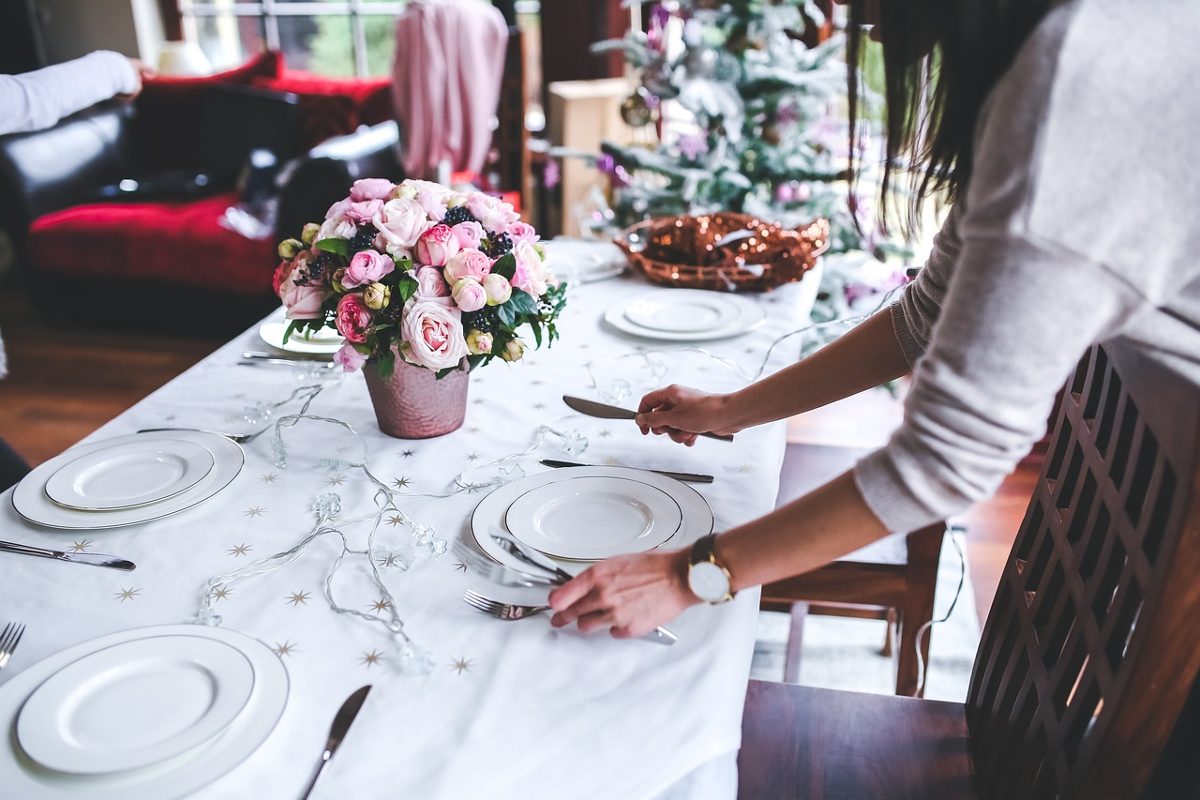
Même les règles de la table sont formulées au passif : ‘Les couverts sont posés à gauche de l’assiette’, ‘Le verre à eau est placé à gauche du verre à vin’. Personne ne dit ‘Vous devez placer…’ ou ‘On place…’. Ce choix évite toute impression de commande ou de jugement. Il transforme une instruction en observation neutre, presque scientifique. Un jeune stagiaire, Lucas, raconte : ‘Au début, je pensais que c’était trop formel. Puis j’ai compris : ce n’est pas de la froideur, c’est une façon de respecter l’autre sans imposer mon point de vue.’
English translation: Even table manners are phrased in the passive voice: 'Cutlery is placed to the left of the plate,' 'The water glass is placed to the left of the wine glass.' No one says, 'You must place…' or 'We place…' This choice avoids any sense of command or judgment. It transforms an instruction into a neutral, almost scientific observation. A young intern, Lucas, recalls: 'At first, I thought it was overly formal. Then I understood: it’s not coldness—it’s a way of respecting others without imposing my point of view.'
Le fromage, bien sûr, joue un rôle central dans cette grammaire silencieuse. On ne dit pas ‘Je choisis le comté’, mais ‘Le comté est proposé en premier’. La phrase ne révèle ni le choix ni le goût personnel — seulement l’ordre prévu, comme une loi naturelle. Lorsqu’un invité hésite, la maîtresse de maison ne demande pas ‘Quel fromage préférez-vous ?’, mais observe : ‘Le brie est très crémeux ce soir.’ Ce n’est pas une suggestion directe, mais une information factuelle, formulée au passif, qui laisse l’autre libre de répondre — ou non. C’est une politesse grammaticale profonde.
English translation: Cheese, of course, plays a central role in this silent grammar. One doesn’t say, 'I choose the Comté,' but rather, 'The Comté is offered first.' The sentence reveals neither choice nor personal taste—only the pre-established order, like a natural law. When a guest hesitates, the hostess doesn’t ask, 'Which cheese do you prefer?' but observes instead: 'The Brie is very creamy tonight.' This isn’t a direct suggestion, but a factual piece of information—phrased in the passive voice—that leaves the other free to respond—or not. It’s a profound grammatical politeness.
Même les erreurs sont adoucies par le passif. Si quelqu’un prend le mauvais verre, personne ne dit ‘Tu as pris le verre à vin !’. On murmure plutôt : ‘Le verre à eau est là, juste à côté.’ La formulation évite la faute, le jugement, la honte. Elle recentre sur la solution, non sur l’erreur. Un professeur de français, présent ce soir-là, note dans son carnet : ‘Le passif n’est pas une fuite devant l’action — c’est une stratégie pour maintenir la fluidité sociale. Il protège la dignité de chacun, même pendant un faux pas.’
English translation: Even mistakes are softened by the passive voice. If someone picks up the wrong glass, no one says, 'You took the wine glass!' Instead, one murmurs: 'The water glass is right there, beside it.' This phrasing avoids fault, judgment, and embarrassment. It refocuses attention on the solution—not the error. A French teacher present that evening jots in her notebook: 'The passive voice isn’t an escape from action—it’s a strategy to maintain social fluidity. It protects everyone’s dignity—even during a misstep.'
Ce soir-là, après le dessert, une jeune Parisienne demande : ‘Pourquoi ne dit-on jamais “je suis fatigué” à table ?’ La réponse vient de la grand-mère : ‘Parce que “je suis fatigué” parle de moi, mais ici, ce soir, nous parlons du moment, du vin, du silence partagé. Alors on dit : “Il est tard”, “La soirée est douce”, “La lumière est chaude”. Le passif n’est pas seulement une forme verbale — c’est une philosophie de présence collective.’ Chaque phrase efface le ‘je’, pour faire place au ‘nous’ implicite.
English translation: That evening, after dessert, a young Parisian asks, 'Why does no one ever say “I am tired” at the table?' The grandmother replies: 'Because “I am tired” speaks only of me—but tonight, here, we speak of the moment, the wine, the shared silence. So we say: “It is late,” “The evening is gentle,” “The light is warm.” The passive voice isn’t just a verb form—it’s a philosophy of collective presence.' Each sentence erases the 'I' to make space for the implicit 'we.'
Avant de partir, Lucas reçoit un petit carnet en cuir. À la première page, une phrase manuscrite : ‘Le français ne se parle pas seulement avec des mots — il se vit avec des silences, des gestes, et des verbes qui laissent la place aux autres.’ Il comprend alors que le passif n’est pas une règle à appliquer, mais une écoute attentive à ce qui se passe *autour* de l’action — le temps, le lieu, la lumière, la respiration commune. Ce n’est pas une grammaire de contrôle, mais une grammaire de confiance.
English translation: Before leaving, Lucas receives a small leather-bound notebook. On the first page, handwritten: 'French is not spoken with words alone—it is lived through silences, gestures, and verbs that leave space for others.' He then understands that the passive voice isn’t a rule to apply, but an attentive listening to what happens *around* the action—the time, the place, the light, the shared breath. It is not a grammar of control, but a grammar of trust.