
The Silent Grammar of the Paris Métro: When Commuters Write Urban Syntax with Their Bodies
Tap any French word to look it up · Read-aloud isn't supported in this browser
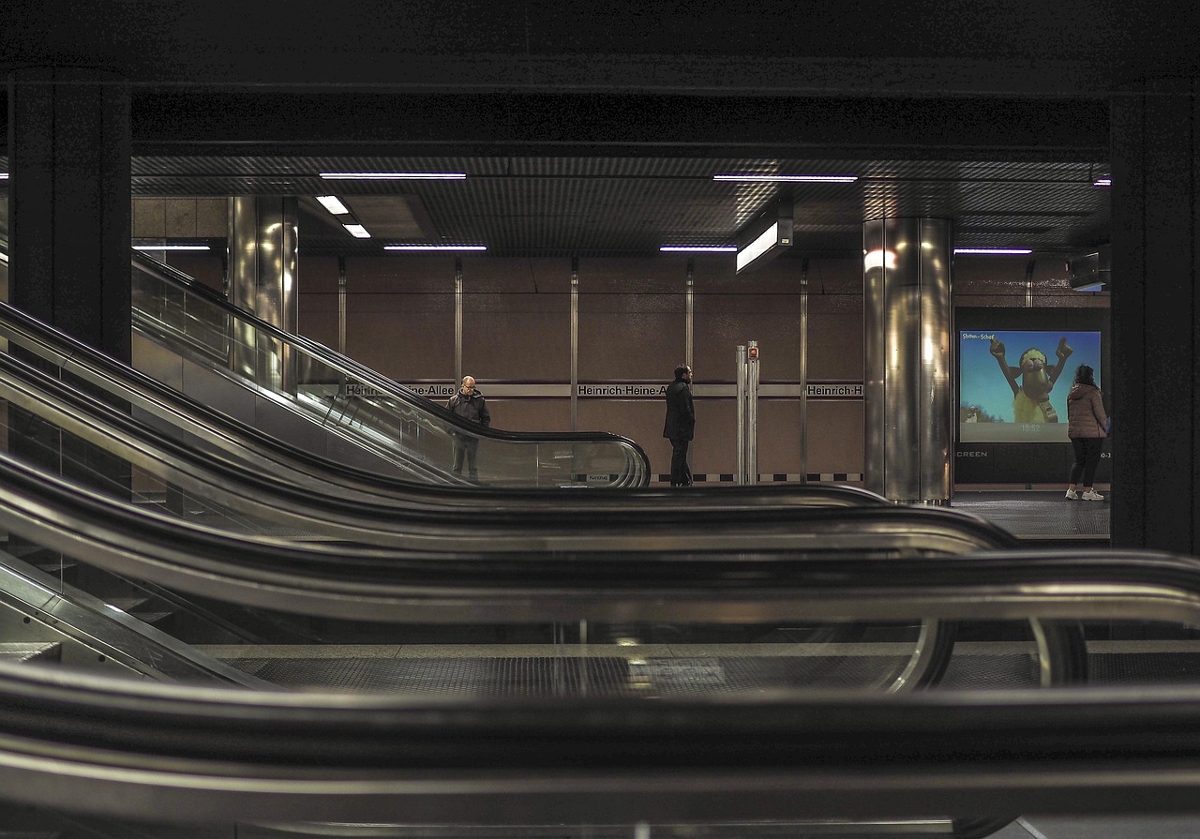
Le quai n’est pas un lieu d’attente : c’est une scène de tension syntaxique. Chaque corps y occupe une position qui dit « sujet », « complément », ou « silence nécessaire ».
English translation: The platform isn’t a place of waiting—it’s a stage of syntactic tension. Each body occupies a position that declares 'subject', 'complement', or 'necessary silence'.
L’entrée en rame obéit à une règle non écrite : on ne franchit le seuil qu’après que le dernier passager sorti a achevé son mouvement complet.
English translation: Boarding obeys an unwritten rule: one crosses the threshold only after the last exiting passenger has completed their full movement.
Le regard évité n’est pas de la froideur : c’est une forme subtile de concordance verbale entre deux sujets qui refusent de s’accorder sur le temps présent.
English translation: Avoided eye contact isn’t coldness—it’s a subtle form of verbal agreement between two subjects who refuse to align in the present tense.
La poignée suspendue au plafond n’est pas un accessoire : c’est un pronom relatif qui relie le corps mobile à la phrase en déplacement.
English translation: The overhead strap isn’t an accessory—it’s a relative pronoun linking the moving body to the sentence in motion.
Quand la porte se referme, ce n’est pas une fin : c’est une ponctuation ferme, une virgule obligatoire avant le prochain segment syntaxique.
English translation: When the door closes, it’s not an ending—it’s firm punctuation, a mandatory comma before the next syntactic segment.
Le silence dans la rame n’est pas vide : il est une forme de subjonctif collectif, exprimant ce qui *doit être maintenu*, sans formulation explicite.
English translation: Silence in the carriage isn’t empty—it’s a collective subjunctive, expressing what *must be maintained*, without explicit formulation.
Le changement de direction à Châtelet n’est pas géographique : c’est une inversion du complément circonstanciel, une réécriture soudaine de la logique spatiale.
English translation: Changing direction at Châtelet isn’t geographical—it’s an inversion of the circumstantial complement, a sudden rewriting of spatial logic.
Même les annonces sont elliptiques : « Prochaine station » omet le verbe, car l’action est déjà inscrite dans le rythme des roues et le souffle des portes.
English translation: Even the announcements are elliptical: 'Next station' omits the verb, because the action is already inscribed in the rhythm of the wheels and the breath of the doors.
Sortir, c’est moins arriver qu’accomplir une désinfection syntaxique : on laisse derrière soi la phrase collective pour reprendre sa propre construction grammaticale.
English translation: Alighting is less about arriving than performing syntactic detoxification: one leaves the collective sentence behind to resume their own grammatical construction.