
The Lives of Albert Camus: An Intimate Portrait of a Solitary Genius
Tap any French word to look it up · Read-aloud isn't supported in this browser
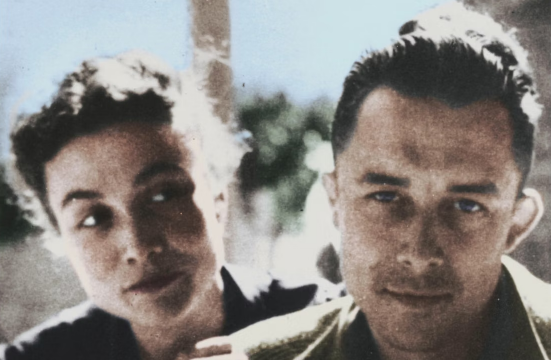
MERCREDI 29 JANVIER À 00 H 00 - DOCUMENTAIRE Filmées à l’aube de l’année 1960, des images amateurs montrent Albert Camus fanfaron et heureux, dans le jardin de sa maison provençale de Lourmarin (Vaucluse). Complice avec sa femme, ses enfants et ses amis les Gallimard, il ressemble à n’importe quel père de famille en vacances. Pourtant, quelques jours plus tard, les journalistes envahiront le village où il réside, et monteront aux arbres pour photographier le cortège funèbre, dans lequel se presseront ses voisins et amis.
English translation: WEDNESDAY, JANUARY 29, AT MIDNIGHT — DOCUMENTARY Amateur footage filmed at the beginning of 1960 shows Albert Camus looking cheerful and full of life in the garden of his Provençal home in Lourmarin, in the Vaucluse region. Sharing warm moments with his wife, children, and friends, the Gallimard family, he looks just like any ordinary father enjoying a holiday. Yet only a few days later, journalists would flood the village where he lived, even climbing trees to photograph his funeral procession, which was attended by his neighbors and friends.
Ces séquences sur les derniers instants de Camus et son enterrement en Provence constituent le début et la fin de cette biographie à la tonalité intime signée Georges-Marc Benamou. Le producteur de cinéma et journaliste, ancien proche des présidents François Mitterrand et Nicolas Sarkozy, est né en Algérie française et connaît bien le monde politique, ce qui lui donne quelques points communs avec l’écrivain.
English translation: These sequences depicting Camus's final moments and his funeral in Provence form the opening and closing scenes of this intimate biography directed by Georges-Marc Benamou. A film producer and journalist who was once close to French presidents François Mitterrand and Nicolas Sarkozy, Benamou was born in French Algeria and is well acquainted with the political world, giving him several things in common with the writer.
Loin de se cantonner à un portrait lisse et scolaire, Benamou raconte l’écrivain avec sensibilité, à travers des images anciennes colorisées et des photographies personnelles rares, sur lesquelles se pose la voix du pensionnaire de la Comédie-Française Philippe Torreton. Son commentaire, sur le ton de la confidence, alterne avec des témoignages des proches d’Albert Camus.
English translation: Rather than limiting himself to a conventional, textbook-style portrait, Benamou presents the writer with sensitivity through colorized archival footage and rare personal photographs, accompanied by the voice of Philippe Torreton, a member of the Comédie-Française. His narration, delivered in an intimate and confidential tone, alternates with testimonies from people close to Albert Camus.
Celui de sa fille Catherine, inédit, se révèle particulièrement touchant. Malicieuse, elle qualifie son père de « petit voyou des quartiers d’Alger ». Avant de devenir philosophe, journaliste, écrivain, dramaturge et résistant, Camus est un petit pied-noir pauvre.
English translation: The previously unpublished testimony of his daughter Catherine is particularly moving. With a mischievous smile, she describes her father as “a little rascal from the neighborhoods of Algiers.” Before becoming a philosopher, journalist, writer, playwright, and member of the French Resistance, Camus was a poor pied-noir, a French person of European descent born in colonial Algeria.
Quand il parvient à décrocher une bourse pour entrer au lycée, il rêve de devenir footballeur professionnel, mais le diagnostic de sa tuberculose en décide autrement. Se croyant mourant, l’élève surdoué ne passe pas l’agrégation. Mais sa maladie le transforme.
English translation: When he finally secures a scholarship to attend secondary school, he dreams of becoming a professional footballer. However, his diagnosis of tuberculosis changes the course of his life. Believing that he is dying, the exceptionally gifted student does not sit for the highly competitive French agrégation examination. Yet his illness transforms him.
« C’est un homme qui a vécu en permanence menacé par la mort (…) et toute son œuvre n’est jamais que la traduction de cette situation, l’absurde », explique ainsi le journaliste Robert Namia. Avec ce dernier, Albert Camus écrit pour le quotidien communiste Alger Républicain, dans lequel il s’indigne notamment du statut de citoyens de seconde zone des musulmans d’Algérie française.
English translation: “He was a man who lived under the constant threat of death (...) and his entire body of work is nothing more than an expression of this condition: the absurd,” explains journalist Robert Namia. Together with Namia, Albert Camus wrote for the communist daily newspaper Alger Républicain, where he particularly denounced the second-class citizenship imposed on Muslims in French Algeria.