
The Bread Basket Rules at the French Table: Slicing, Passing, and the Etiquette of Silence
Tap any French word to look it up · Read-aloud isn't supported in this browser
Le pain français n’est pas seulement un aliment : c’est un élément structurant du repas, presque une extension de la main. On le pose directement sur la table, jamais dans une assiette, sauf s’il est déjà tranché et servi comme accompagnement. Cette présence physique rappelle que le pain appartient à tous les convives, mais qu’il ne doit pas être traité comme un plat ordinaire.
English translation: French bread is not merely food—it’s a structural element of the meal, almost an extension of the hand. It is placed directly on the table, never in a plate, unless already sliced and served as an accompaniment. This physical presence reminds diners that the bread belongs to everyone at the table—but must not be treated like an ordinary dish.
Lorsqu’on prend du pain, on choisit une seule pièce entière, même si elle semble grande. Couper une baguette en deux avant de la poser sur la table est considéré comme une rupture de rythme : cela suggère une impatience ou une volonté de contrôler le partage. La baguette reste intacte jusqu’à ce que chaque personne décide, librement et silencieusement, quand et comment en prendre.
English translation: When taking bread, one selects a single whole piece—even if it appears large. Cutting a baguette in half before placing it on the table is seen as disrupting the rhythm: it suggests impatience or an attempt to control the sharing process. The baguette remains intact until each person freely and silently decides when and how to take some.
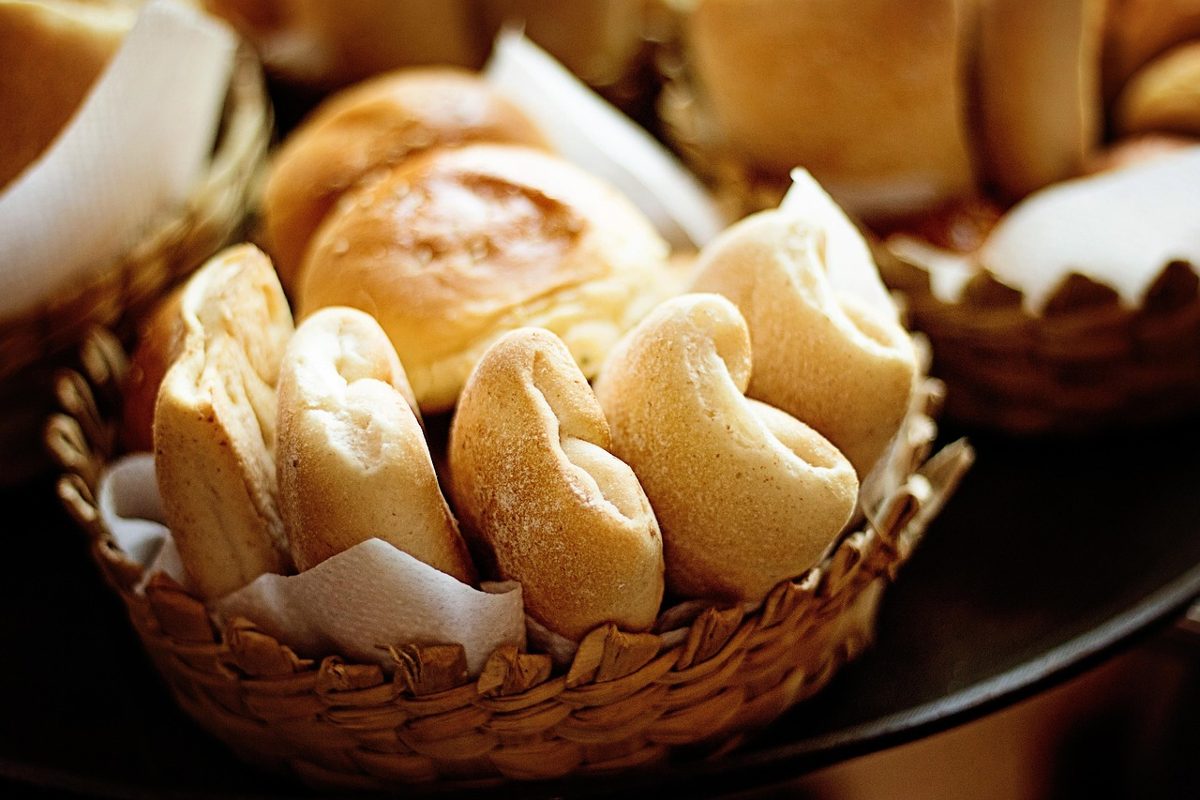
On ne passe jamais le panier à quelqu’un sans d’abord y avoir pris soi-même une portion. Ce geste minimal exprime une forme de reconnaissance mutuelle : chacun a droit à son tour, mais personne ne peut prétendre à l’exclusivité. Le panier circule lentement, souvent sans mots, comme un objet rituel dont le mouvement reflète l’équilibre entre générosité et retenue.
English translation: One never passes the bread basket to someone without first taking a portion oneself. This small gesture expresses mutual recognition: everyone has the right to their turn, yet no one may claim exclusivity. The basket circulates slowly, often without words—like a ritual object whose movement reflects the balance between generosity and restraint.
Une fois posé sur la table, le pain ne se mange pas immédiatement. Il attend, comme un tiers silencieux à la conversation. Seuls les plus jeunes ou les invités étrangers risquent de commencer trop tôt, ce qui provoque parfois un léger silence gêné. Ce délai n’est pas une règle écrite, mais une attente partagée, presque physiologique, liée au rythme naturel du repas.
English translation: Once placed on the table, the bread is not eaten immediately. It waits—like a silent third party to the conversation. Only the youngest guests or foreign visitors risk starting too early, sometimes triggering a brief, awkward silence. This pause is not a written rule, but a shared, almost physiological expectation tied to the meal’s natural rhythm.
Couper son pain avec un couteau est autorisé, mais uniquement après l’avoir posé sur sa propre assiette. Jamais sur la table ni sur le pain commun. Ce geste marque une transition : le pain quitte le domaine collectif pour entrer dans l’espace personnel. Il devient alors une portion individuelle, non plus un symbole de partage, mais un acte intime de préparation.
English translation: Cutting one’s own bread with a knife is permitted—but only after placing it on one’s own plate, never on the table or shared loaf. This gesture marks a transition: the bread leaves the collective domain and enters personal space. It then becomes an individual portion—not a symbol of sharing, but an intimate act of preparation.
Il est courant de voir des convives déposer discrètement un morceau de pain sur le bord de leur assiette, sans le manger tout de suite. Cela signifie simplement qu’ils ont pris leur part, sans pour autant engager une consommation immédiate. Ce petit geste évite toute ambiguïté sur la disponibilité du pain et maintient une forme de continuité visuelle entre les personnes.
English translation: It is common to see guests discreetly place a piece of bread on the edge of their plate without eating it immediately. This simply signals they have taken their share—not necessarily beginning consumption right away. This small gesture removes any ambiguity about the bread’s availability and maintains a subtle visual continuity among diners.
À la fin du repas, le pain restant n’est pas jeté, mais souvent conservé pour le lendemain ou offert aux oiseaux. Ce geste n’est pas seulement économique : il prolonge symboliquement la convivialité. Le pain qui reste incarne une promesse non dite—celle d’un prochain repas partagé, d’une continuité dans la relation sociale.
English translation: At the end of the meal, leftover bread is not discarded but often saved for the next day or offered to birds. This gesture is not merely economical—it symbolically extends hospitality. The remaining bread embodies an unspoken promise: of another shared meal, of continuity in social connection.
Ces règles ne sont jamais expliquées verbalement, car elles appartiennent à un langage corporel collectif, transmis par observation et répétition. Elles ne garantissent pas la politesse, mais créent un cadre où la politesse peut s’exprimer naturellement—sans effort, sans surveillance, juste par la présence attentive d’un pain bien placé.
English translation: These rules are never verbally explained, because they belong to a collective bodily language—passed down through observation and repetition. They do not guarantee politeness, but create a framework where politeness can emerge naturally—effortlessly, without supervision, simply through the attentive presence of well-placed bread.